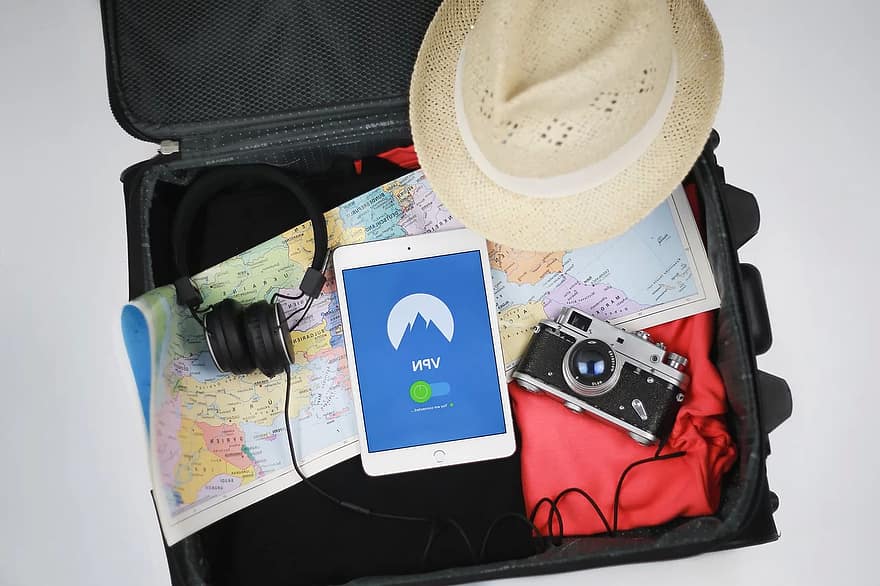

An updated ranking of countries by internet quality for remote work has been published. The top three are: South Korea (267 Mbps), Singapore (255 Mbps), and Romania (232 Mbps). The assessment was built on five parameters: download speed, upload speed, latency, connection reliability, and mobile internet quality as a backup connection.
The ranking covers 15 countries and draws on data from the Speedtest Global Index, city-level measurements in coworking spaces and nomad communities, as well as the authors’ own tests. The core message: internet connectivity remains the single infrastructure factor capable of negating every other advantage a country offers a remote worker. One digital nomad listed 9 ways her smartphone helps her travel and work, but without internet, none of it matters.
Benchmarks for Video Calls and Daily Work
Minimum requirements for stable video conferences: 25+ Mbps download, 10+ Mbps upload, and ping no higher than 50 ms. The authors emphasize that reliability matters more than raw speed. A 99.9% uptime figure means roughly 8 hours of downtime per year, while 99% already amounts to 87 hours. In countries with frequent outages, stability is what determines whether productive work is even possible.
Top 15 Countries by Internet Quality for Remote Work
- South Korea — 267 Mbps. World leader in fiber penetration with widespread 5G coverage.
- Singapore — 255 Mbps. Fiber and 5G in every corner of the city-state, uptime above 99.99%.
- Romania — 232 Mbps. The cheapest gigabit internet in the world (around $10 per month).
- Spain — 195 Mbps. 95% fiber coverage, 5G in major cities, high stability.
- France — 190 Mbps. Large-scale fiber deployment program completed.
- Portugal — 170 Mbps. Reliable fiber across most urban areas.
- Thailand — 145 Mbps. The fastest internet in Southeast Asia.
- Japan — 140 Mbps. Ultra-reliable connections with minimal outages.
- Estonia — 135 Mbps. Free public Wi-Fi nationwide, a fully digital state.
- Malaysia — 120 Mbps. Kuala Lumpur’s connectivity rivals that of developed nations.
- UAE — 115 Mbps. Full 5G coverage, but restrictions on VoIP services.
- Croatia — 100 Mbps. Good fiber in Split, Dubrovnik, and Zagreb.
- Vietnam — 85 Mbps. Excellent price-to-speed ratio, but weak international bandwidth.
- Mexico — 65 Mbps. Huge variation in speeds depending on the city.
- Colombia — 60 Mbps. Medellín leads, while other regions lag noticeably behind.
How the Ranking Was Compiled
The composite score is built from five layers: download and upload speed, latency, uptime percentage, and mobile connectivity quality as a backup connection. National averages are drawn from the Speedtest Global Index and Ookla data, while city-level figures are collected from coworking spaces, nomad communities, and the authors’ own tests.
What the Speed Numbers Actually Mean in Practice
Download speed determines how quickly data arrives; upload speed governs sending video streams, screen sharing, and pushing code to repositories. Latency under 50 ms feels instantaneous, while above 100 ms creates noticeable lag during video calls. Uptime measures how consistently the connection simply stays alive, and when working with cloud sync and large files, it matters more than peak speed.
Europe and Asia: Where Internet and Lifestyle Balance Best
In Europe, Spain and France lead on speed, though Portugal and Spain stand out for the optimal combination of connectivity quality, cost of living, and visa accessibility. In Southeast Asia, Thailand leads confidently, while Malaysia — especially Kuala Lumpur — delivers a level comparable to developed economies. Japan bets on reliability: connection drops are rare there, though the cost of living is high.
A Closer Look at the Top Three
South Korea. Ubiquitous fiber and 5G; apartments in Seoul consistently deliver 500–1,000 Mbps. Main nomad hubs: Seoul, Busan, Jeju. Home internet runs $20–35 per month, unlimited mobile plan with 5G costs $40–60.
Singapore. Effectively a “city-as-network”: latency to servers in Hong Kong and Tokyo stays under 40 ms, and uptime exceeds 99.99%. The main caveat is the high cost of living, which limits the pool of potential residents.
Romania. The world’s best price-to-speed ratio: gigabit fiber for $8–12 per month. Bucharest, Cluj-Napoca, Brașov, and Timișoara deliver latency to European servers of under 30 ms.
Real-World Speeds in Popular Cities
Seoul: coworking space 500–1,000 Mbps, apartment 300–1,000 Mbps.
Bucharest: coworking space 300–800 Mbps, apartment 200–1,000 Mbps.
Barcelona: coworking space 200–500 Mbps, apartment 100–300 Mbps.
Lisbon: coworking space 200–400 Mbps, apartment 100–200 Mbps.
Bangkok: coworking space 200–400 Mbps, apartment 50–200 Mbps.
Chiang Mai: coworking space 100–300 Mbps, apartment 50–100 Mbps.
Kuala Lumpur: coworking space 100–300 Mbps, apartment 100–500 Mbps.
Canggu (Bali): coworking space 100–200 Mbps, apartment 20–50 Mbps.
Mexico City: coworking space 100–300 Mbps, apartment 30–100 Mbps.
Medellín: coworking space 100–200 Mbps, apartment 30–100 Mbps.
Overall takeaway: coworking spaces are almost always faster than home connections. The exceptions are Korea and Romania, where residential fiber matches — and sometimes surpasses — commercial venues. A similar situation is seen in Kuala Lumpur.
How to Ensure a Stable Internet Connection Abroad
Before renting accommodation. Run a speedtest via fast.com or speedtest.net at different times of day, including peak hours. Ask the landlord about the provider and connection type: fiber is always preferable to DSL or cable.
On the first day in the country. Buy a local SIM with data plan ($10–30 per month), consider eSIM services (Airalo, Holafly) as an emergency backup, and use a portable router if needed.
For reliable day-to-day work. An Ethernet adapter for $10 can effectively double your speed by eliminating Wi-Fi interference. Choose a VPN server closer to your work servers rather than your physical location. During important video calls, disable cloud sync, automatic updates, and background downloads. As a fallback if video drops, it helps to have a backup plan to switch to audio-only.
Internet as a Way to Feel at Home
For a digital nomad, internet means more than just work video calls and pushing code. It’s also the ability to build a familiar environment anywhere in the world. Many remote workers admit they always carry a few small things that create a sense of home: a favorite mug, a blanket, a couple of decorative trinkets. The same applies to digital space. A personal inbox, accounts on social media and video games, an account at an online casino where you can spend an evening playing slots, poker, or this live game Crazy Time by Evolution — with rules and bonus rounds you’ve long known by heart. All of this functions like personal belongings, only in the digital realm.
These may seem like small things, but they are exactly what helps people settle into a new place faster — and that’s not always easy, even for those who move constantly. To make sure this digital home opens without delays in Seoul, Bucharest, or Chiang Mai, it’s worth checking connection quality before the suitcase is even unpacked.
Where to Find the Full Dataset
An expanded comparison of 95 countries is available in the free dataset Digital Infrastructure & Remote-Work Reliability Index 2026. Beyond basic speed metrics, it includes additional reliability layers: video call quality during peak hours, power outage frequency, and an assessment of mobile and eSIM backup options.