
Quick Answer
Workplace first aid certification delivers trained personnel who can administer immediate care during injuries or medical events, directly reducing injury severity and supporting faster recovery. It satisfies CPR requirements and other occupational safety training obligations under Canadian regulations, including provincial codes like Alberta’s OHS. Teams gain practical emergency response skills that bridge the gap until professional help arrives, creating a more resilient work environment and minimizing downtime from incidents.
Introduction
Without prepared responders on site, delays in basic intervention can worsen outcomes, extend recovery periods, and increase associated costs for businesses through lost productivity or regulatory penalties. Canadian regulations recognize this reality by mandating specific provisions for first aid services, supplies, and trained personnel based on workplace size, hazard levels, and risk assessments.
For organizations in regions with rigorous provincial guidelines, accessing quality programs through approved providers remains critical to compliance and effectiveness. First Aid Training Edmonton offers one pathway to such certified instruction, grounded in current best practices. The result is a workforce equipped to act decisively, protecting colleagues and maintaining operational continuity even under pressure.
Understanding First Aid Certification and Legal Requirements
Canadian regulations, particularly in provinces like Alberta, mandate these provisions through the Occupational Health and Safety Code, specifically Part 11, which requires employers or prime contractors to arrange approved training, supplies, and equipment. The requirements scale according to workplace factors such as the number of workers per shift, the level of hazards present, and the proximity to medical facilities.
Key Elements of Certification Levels
Approved programs align with CSA Standard Z1210-17, which defines three primary levels of first aid training: basic, intermediate, and advanced. Each level builds progressively deeper competencies in assessment, intervention, and stabilization techniques.
- Basic first aid focuses on essential skills for low-hazard environments, including wound care, basic bandaging, and introductory CPR training requirements for adults.
- Intermediate first aid expands to address moderate-risk settings with added instruction in shock management, spinal injury immobilization, and more extensive breathing and circulation support.
- Advanced first aid suits high-hazard or remote sites, incorporating detailed trauma care, opioid overdose response, and integration with emergency medical services protocols.
Conduct a formal workplace hazard assessment before selecting a certification level, since regulators base the required number of trained first aiders and kit types on this evaluation.
How Regulations Determine Requirements
The reality is that requirements vary significantly by workforce size and risk classification. For example, low-hazard workplaces with fewer than 10 workers typically need at least one basic first aider, while larger or higher-risk operations demand multiple intermediate or advanced personnel plus specialized equipment. Certifications remain valid for up to three years, with recertification or full retraining necessary to maintain compliance.
In practice, this structure prevents gaps in coverage and aligns training with actual workplace demands. Organizations benefit from choosing programs delivered by approved agencies that follow national curriculum guidelines, thereby satisfying occupational safety training obligations while building genuine capability among staff.
Building Emergency Response Skills Through CPR Training and Beyond
Certified programs deliver hands-on practice that transforms theoretical knowledge into reliable emergency response skills. Participants master scene assessment, primary and secondary surveys, and appropriate interventions under simulated pressure, which proves far more effective than passive learning methods.
CPR training requirements form a core component across all levels, emphasizing high-quality chest compressions, rescue breaths when indicated, and automated external defibrillator use to address sudden cardiac arrest, one of the leading causes of workplace fatalities.
Core Skills Developed in Certification
Training curricula emphasize practical competencies that directly support rapid intervention. Key areas include:
- Recognition and management of life-threatening conditions such as airway obstruction, severe bleeding, and anaphylaxis.
- Proper application of spinal motion restriction techniques for suspected neck or back injuries.
- Treatment of environmental emergencies, including heat-related illness, hypothermia, and chemical exposures common in various industries.
- Administration of supplemental oxygen when equipment is available, along with basic wound care and immobilization.
Prioritize programs that incorporate scenario-based training with realistic mannequins and role-playing, since repeated practice in controlled settings significantly improves retention and performance during actual incidents.
Integrating CPR and Advanced Interventions
CPR training requirements align with current Heart and Stroke Foundation or equivalent guidelines, requiring demonstration of effective compressions at 100 to 120 per minute, adequate depth, and minimal interruptions. Beyond basic life support, intermediate and advanced certifications introduce opioid overdose response using naloxone kits, detailed shock recognition and treatment, and coordination with incoming emergency services.
Comparison of Certification Levels
| Level | Typical Workplace Application | Key CPR Component | Additional Skills Focus | Validity Period |
| Basic | Low-hazard offices, retail | Adult CPR/AED only | Basic wounds, burns, fractures | 3 years |
| Intermediate | Moderate-hazard construction, manufacturing | Adult/child/infant CPR/AED | Shock, spinal, breathing emergencies, opioids | 3 years |
| Advanced | High-hazard remote sites, oil & gas | Full BLS with advanced airway | Trauma, environmental, detailed assessment | 3 years |
Selecting the appropriate level based on a documented risk assessment prevents under- or over-training while meeting regulatory expectations. The result is personnel who respond confidently and competently, bridging the critical interval before professional medical arrival.
Maintaining Occupational Safety Training for Long-Term Effectiveness
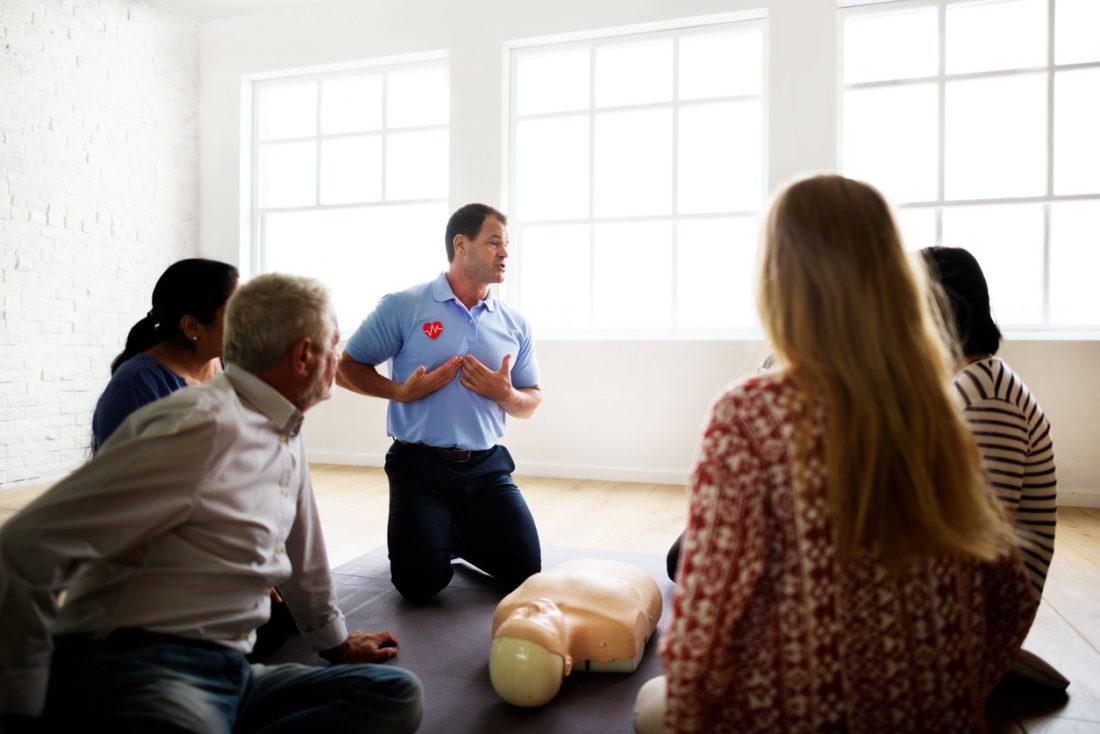
Sustaining the value of workplace first aid certification demands deliberate strategies that keep skills sharp and compliance current over time. Initial training provides a strong starting point, yet knowledge degrades without reinforcement, particularly for infrequent emergencies where muscle memory and decision-making speed matter most. Regular refreshers, combined with workplace integration, transform certification from a one-time checkbox into an active layer of protection.
Strategies for Skill Retention
Effective maintenance relies on structured approaches grounded in adult learning principles and regulatory expectations. Consider these practical methods:
- Schedule annual or biennial refresher sessions, even when full recertification occurs every three years, to reinforce critical techniques like chest compression quality and AED pad placement.
- Incorporate first aid drills during safety meetings or toolbox talks, simulating realistic scenarios specific to the site’s hazards.
- Assign trained personnel periodic responsibilities, such as monthly kit inspections or leading peer education on basic response steps.
- Track certification expiry dates through a centralized system and issue reminders well in advance to avoid coverage gaps.
Pair refresher training with actual workplace incidents (near-misses or minor events) during debriefs, reviewing what went right or could improve, since real-context discussion strengthens long-term recall far more than isolated classroom review.
Comparison of Maintenance Approaches
| Approach | Frequency | Primary Benefit | Resource Demand | Best Suited For |
| Annual skill refreshers | Yearly | Maintains technique accuracy and confidence | Moderate | Medium to large teams |
| Full recertification | Every 3 years | Updates to current standards and protocols | High | Regulatory compliance priority |
| On-site drills/scenarios | Quarterly or more | Builds site-specific familiarity | Low to moderate | High-hazard or remote operations |
| Peer teaching/mentorship | Ongoing | Reinforces knowledge through explanation | Low | Smaller workplaces |
The result is a resilient safety culture where emergency response skills remain ready when needed. Organizations that invest in consistent maintenance experience fewer severe outcomes from incidents and demonstrate proactive commitment to worker well-being.
Securing Long-Term Workplace Readiness Through Ongoing Certification
When combined with robust CPR training requirements and practical emergency response skills, certification equips teams to manage incidents swiftly and competently, reducing harm and supporting regulatory compliance. Regular maintenance through refreshers, drills, and updated risk assessments keeps that capability active rather than theoretical.
All in all, organizations that treat occupational safety training as a continuous priority experience measurable benefits, including fewer severe injuries, shorter recovery times, and stronger evidence of due diligence. Prioritizing consistent, standards-aligned certification protects people first and strengthens operational resilience over the long term.